
Last updated November 5, 2026
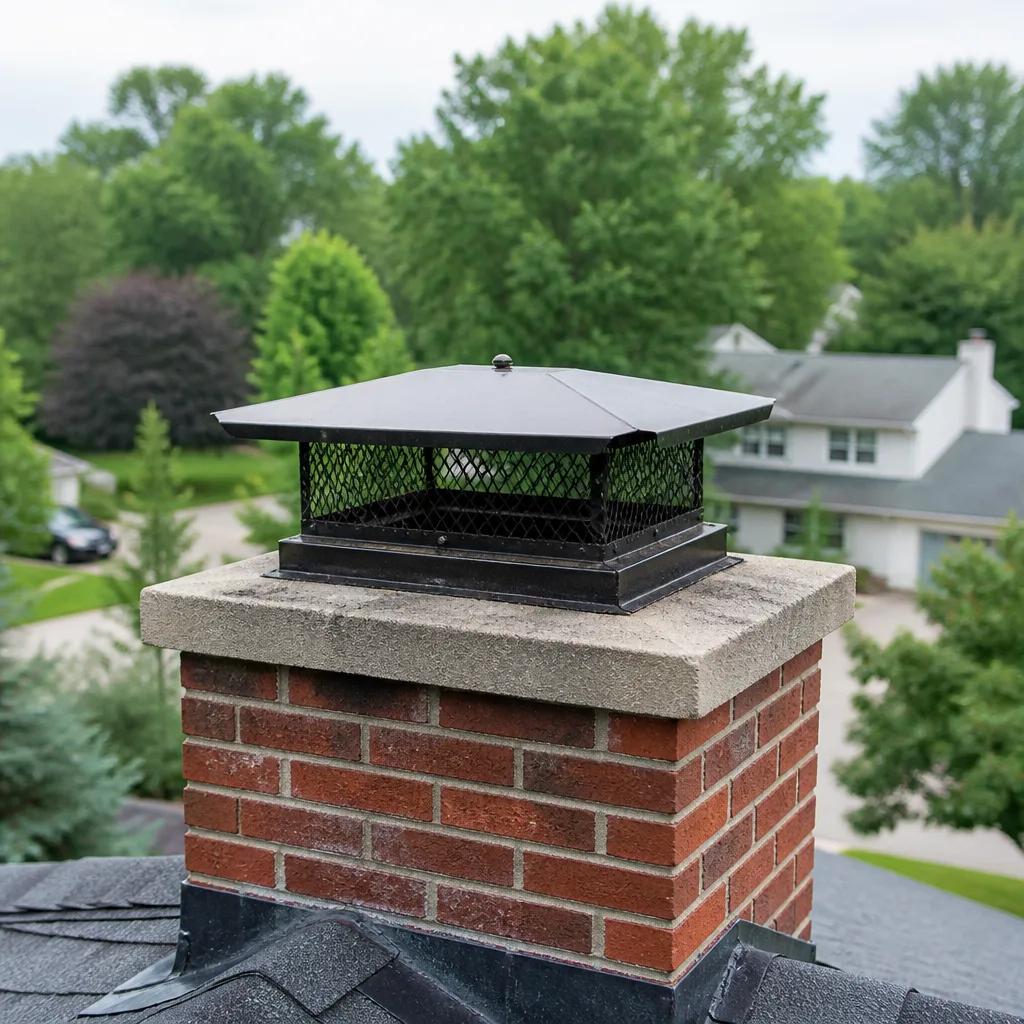 Sweep & inspection
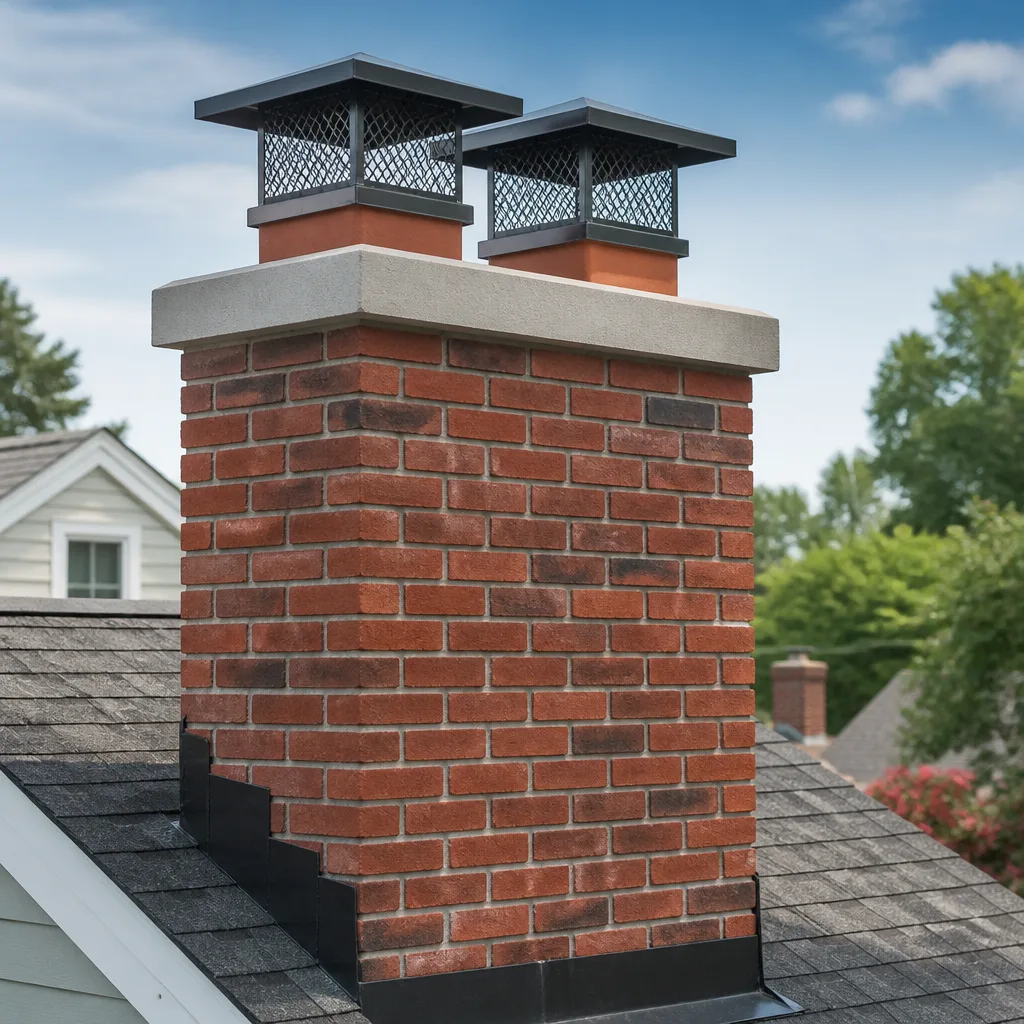 Caps & crowns
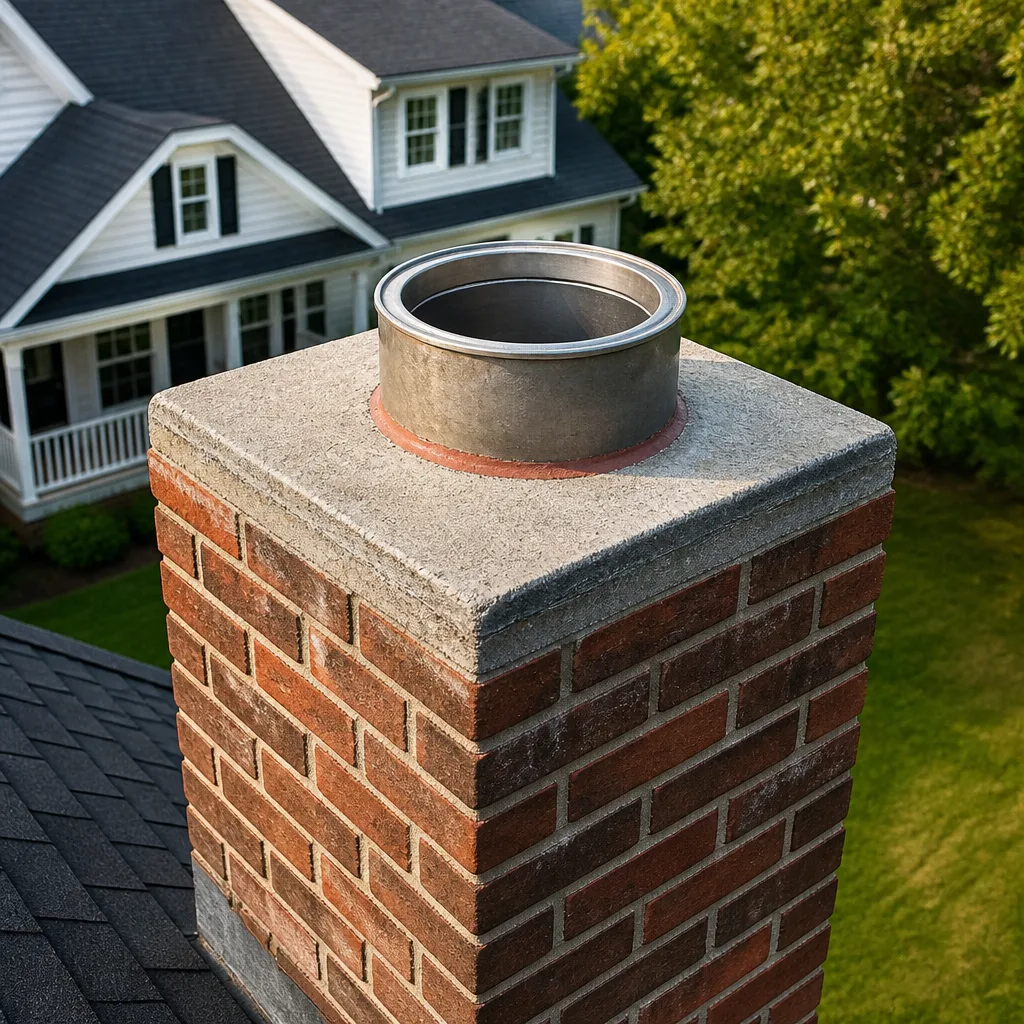 Flue relining
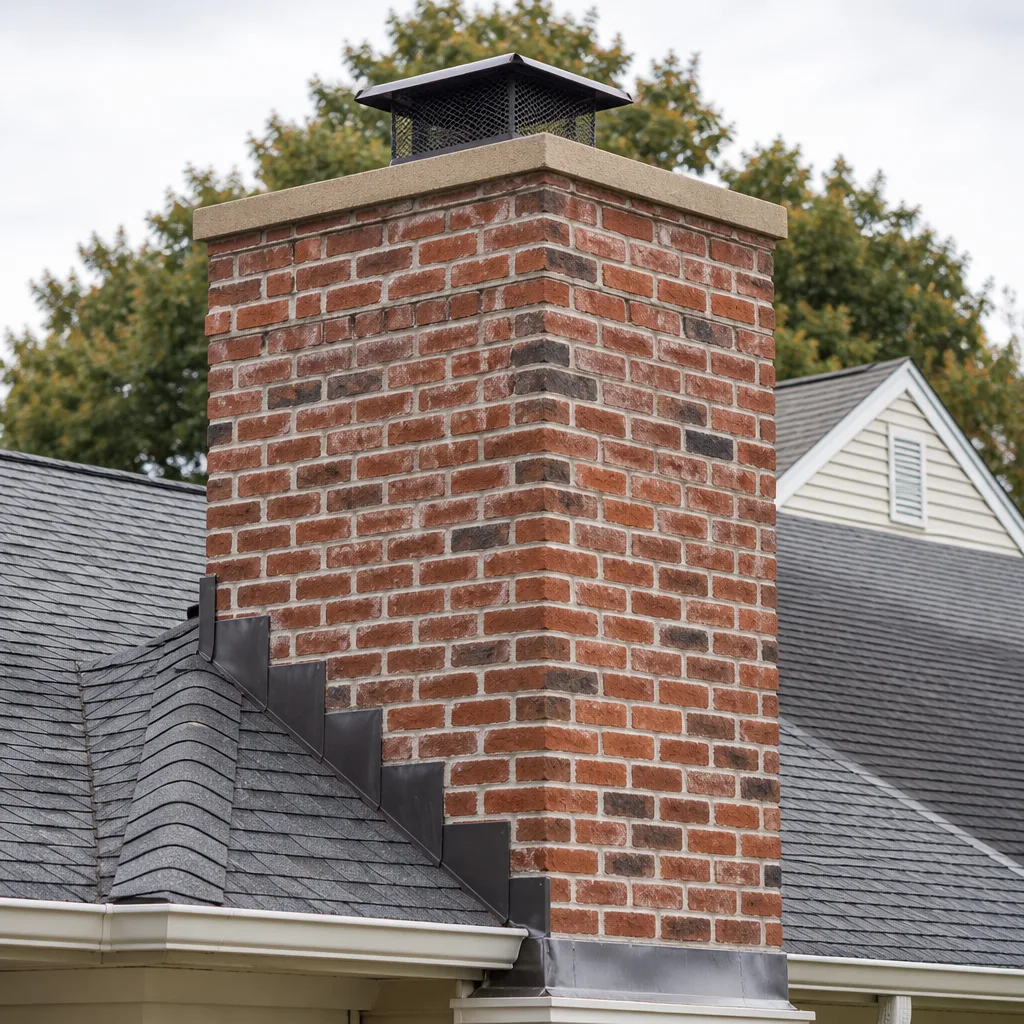 Masonry repair
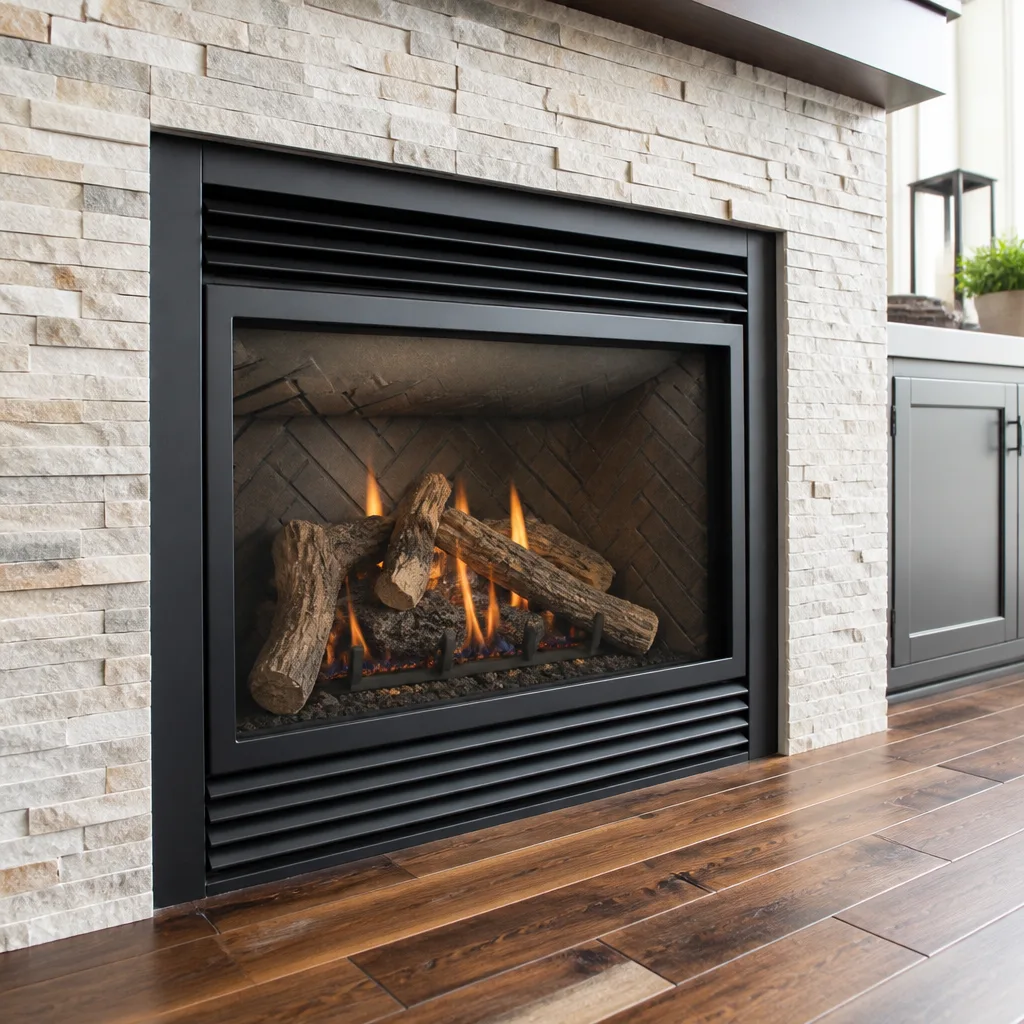 Gas fireplace service
Level 1 sweep and inspection to the NFPA 211 annual standard - flue, crown, cap, and flashing checked and photographed
Chimney sweep logs do not sweep chimneys. They loosen some creosote - which then falls where a brush and vacuum still have to collect it.
Chimney Cleaning Warning Signs: A North Hollywood Homeowner’s Reference Guide
A white stain running down the outside of your chimney in a dry climate like North Hollywood’s isn’t a cosmetic issue. It’s efflorescence, and it means water is already moving through your masonry in places you can’t see. Most chimney warning sign lists recycle the same obvious symptoms: smoke in the room, visible cracks, a fireplace that smells. But the signals that precede a real problem here are subtler. They hide in the way stucco meets brick, in the specific odor of creosote on a hot September afternoon, in the faint scratching that isn’t your imagination at dusk. This guide walks through the early indicators most North Hollywood homeowners miss until they become expensive repairs. We’re writing it because we’ve answered enough panicked phone calls to know that the warning signs were usually there for months before anyone noticed.
Quick Answer
The clearest chimney cleaning warning signs in North Hollywood are: a campfire or asphalt smell inside your home on warm days, white mineral staining (efflorescence) on exterior masonry, smoke that drifts back into the room, animal activity near the chimney crown, and flaking or spalling brick inside the firebox. If you notice any of these, schedule a professional chimney sweep and inspection before your next burn season. Waiting turns a cleaning into a liner repair or a masonry rebuild. Early detection is cheaper, safer, and faster to correct.
Styles & brands we work with
- Sweep & inspection
- Caps & crowns
- Flue relining
- Masonry repair
- Gas fireplace service
Table of Contents
- Efflorescence: The White Staining Homeowners Ignore
- The Hot-Day Odor Problem: Sulfur, Asphalt, and What They Mean
- Animal Activity at the Crown: More Than an Annoyance
- Reading Your Draft: Back-Puffing vs. Chronic Smoke Spillage
- Inside the Firebox: What to Look For Before You Call
- The Dryer Vent Connection: A Fire Hazard in Plain Sight
- How Often Should a North Hollywood Chimney Be Swept?
- What Does It Cost to Address These Warning Signs?
Efflorescence: The White Staining Homeowners Ignore
Efflorescence is the white, chalky residue that appears on brick, stucco, or concrete. It happens when water moves through masonry, dissolves naturally occurring salts inside the material, and carries those salts to the surface. When the water evaporates in a dry climate, the salts stay behind. That white powder is a mineral deposit, and it’s evidence of moisture migration through your chimney’s structure.
In North Hollywood, the climate pattern makes efflorescence especially easy to miss. This part of the San Fernando Valley gets long dry stretches between rain events, often months apart. When rain does arrive, it can be intense for a day or two, then vanish. That creates a dry-wet cycle where water penetrates masonry during a storm, then evaporates quickly afterward. The stain left behind looks like it might just be dust or weathering. Homeowners often scrub it off and forget about it. But the water that created it is still doing damage. Efflorescence on a chimney usually means the chimney crown is cracked, the mortar joints have failed, or the cap is letting water into the flue. Each of those failures is a progressive problem. The longer water moves through the system, the more damage it does to the liner, the smoke shelf, and the interior firebox masonry.
Here is what to look for:
- White streaks below the crown: Water is entering at the top and running down, leaving mineral trails as it evaporates.
- White patches on stucco where it meets brick: The transition between materials is a common water entry point in Southern California construction.
- A chalky bloom that reappears after rain: This is active water movement, not an old stain.
- Spalling or flaking brick along the same path: Water has been moving through those bricks long enough to weaken the surface.
We use professional-grade cap and crown materials from Gelco and Olympia Chimney when we repair this kind of damage. A properly sealed crown with an overhang keeps water from soaking into the masonry below. But the first step is recognizing that the white stain isn’t cosmetic. It’s your chimney telling you something. In our experience, by the time efflorescence is visible on the outside, the inside of the flue has already endured at least one season of unwanted moisture.
The Hot-Day Odor Problem: Sulfur, Asphalt, and What They Mean
Your fireplace has a smell. Not the pleasant woodsmoke smell from a fire, but a sharp, chemical odor that comes out of nowhere on a warm afternoon. Maybe it smells like sulfur, like old asphalt, or like a campfire doused with water days ago. This odor is one of the most misunderstood warning signs in chimney care, and it’s particularly common in North Hollywood’s late-summer heat.
The science is straightforward. Creosote builds up inside the flue every time you burn wood. Creosote is a sticky, tar-like byproduct of incomplete combustion. During the cooler months, it sits there as a solid or semi-solid glaze. When the outside temperature climbs into the 90s and the sun beats down on the chimney chase, the flue interior heats up. That heat softens the creosote. As it warms, it off-gasses volatile compounds. Those compounds travel down the flue and into your living space through the damper, especially if the damper doesn’t seal tightly. The result is that sharp, hot-tar smell that seems to come from nowhere.
Here is what different odors typically indicate:
- Asphalt or tar smell on a hot day: Creosote buildup inside the flue is softening and releasing volatiles. This is a cleaning issue now and a fire hazard if ignored.
- Sulfur or rotten egg smell: Often means combustion gases are back-drafting, or that there’s a moisture problem mixing with creosote inside the flue. In a gas appliance chimney, it can also indicate venting problems.
- Wet campfire smell after rain: Water is entering the flue and saturating old creosote deposits. That wet creosote is more acidic and corrodes the liner faster.
- Musty or organic odor in the firebox: Could be an animal that has nested deeper in the system, or old leaves and debris decomposing on the smoke shelf.
The hot-day odor is a signal that the chimney system hasn’t been cleaned recently, or that the last cleaning didn’t address the full flue. A standard sweep removes loose creosote from the flue walls. But glazed (third-degree) creosote is too hard for normal brush work. That’s where a professional chimney sweep familiar with HeatShield ceramic restorative systems can assess whether you need a deeper cleaning or a more involved liner restoration. If you smell your chimney on a 90-degree afternoon, don’t wait until November to think about it. The problem is already active.
Animal Activity at the Crown: More Than an Annoyance
You hear scratching. Or you see dark shapes fluttering around the chimney cap at sunset. You might find bits of twig, dried leaves, or small bones on the hearth in the morning. North Hollywood has a healthy population of roof rats, tree squirrels, and birds like sparrows and starlings that look at an uncapped chimney and see a protected nesting cavity. Every one of them is a warning sign, and the warning isn’t just about noise.
When an animal nests in or near your chimney, several things happen at once. The nest itself is a fire hazard. Twigs, grasses, feathers, and fur are all highly combustible. If the nest sits on the smoke shelf or inside the flue, a single hot ember from your first fire of the season can ignite it. The nest also blocks airflow. That creates draft problems that can push smoke and carbon monoxide back into your home. Finally, animal activity at the crown often means the chimney cap is damaged, rusted through, or missing entirely. If a raccoon can get in, so can rain, debris, and embers leaving the flue. That issue extends beyond nuisance: an uncapped or improperly capped chimney can allow hot particles to escape onto your roof or into nearby foliage during burn season.
Signs to watch for:
- Scratching or scurrying sounds inside the walls near the chimney: An animal is in the chase, not just visiting.
- Debris falling into the firebox between uses: Nesting material is being deposited directly into the system.
- Droppings or a strong ammonia smell near the hearth: Active or recently active animal presence.
- A rusted or damaged cap visible from the ground: The entry point for whatever is getting in.
We install Gelco chimney caps as part of our repair work. A properly fitted cap with side mesh keeps animals out while allowing proper draft. If you’ve had an animal on your roof, the cap is almost certainly part of the problem. Call before you light anything. A nest in the wrong place is a chimney fire waiting to happen.
Reading Your Draft: Back-Puffing vs. Chronic Smoke Spillage
Draft is the air pressure system that makes your chimney work. Warm air rises because it’s less dense than the cooler air around it. That rising air creates lower pressure at the bottom of the chimney, which pulls combustion gases up and out. When draft fails, the results range from annoying to dangerous. The specific way draft fails tells you what’s wrong.
Back-puffing is a periodic event. You light a fire, it burns well for a few minutes, then a puff of smoke comes out of the fireplace opening. It might happen when a door in the house opens, when the furnace kicks on, or when a strong gust of wind hits the chimney. Back-puffing usually means the chimney is undersized for the firebox, the flue is cool and not establishing adequate draft, or there’s a pressure imbalance caused by competing air demands inside the house. In North Hollywood’s older tract homes, which often have single-pane windows and less sophisticated air sealing, this pressure balance issue is common. A solution might be as simple as cracking a window near the fireplace when burning, or it might require a new damper or flue liner. The key is that back-puffing is intermittent. It comes and goes based on conditions.
Chronic smoke spillage is different. Every fire pushes smoke into the room. The smoke doesn’t rise, doesn’t pull toward the flue, just hangs in the room and sets off your smoke detectors. This points to a more structural problem: the flue is partially or fully blocked, the damper is broken and not opening fully, or the chimney is simply too short to establish functional draft given the roofline and surrounding structures. Chronic spillage is a carbon monoxide risk. It means the combustion gases from your fireplace are not being safely vented. This is not a condition to troubleshoot on your own.
Here is a simple way to check draft before you call:
- Open the damper completely and open a window an inch in the room where the fireplace sits.
- Light a rolled newspaper and hold it up inside the firebox opening near the damper.
- Watch the smoke. If it flows up the flue immediately, draft is at least partially functional.
- If smoke curls back into the room or rises slowly, you have a draft problem that needs professional diagnosis.
A draft assessment is part of any proper chimney inspection. We check what’s blocking airflow, what the liner condition is doing to flue performance, and whether the chimney height is appropriate for the roof. We repair what we find, which means a draft diagnosis isn’t just a note on a report. It’s an actionable repair plan.
Inside the Firebox: What to Look For Before You Call
You can learn a lot about your chimney’s health by looking inside the firebox with a flashlight. This is information gathering, not do-it-yourself repair. What you document helps a professional chimney sweep understand what you’re dealing with before they arrive. We recommend taking photos with your phone. These images help us understand what you see and prioritize the inspection.
Spalling is the term for brick or stone that flakes, crumbles, or peels away from the surface. In North Hollywood homes with older brick fireboxes, spalling is common because the bricks have been through years of heat cycling. Each fire causes the masonry to expand slightly. When it cools, it contracts. Thousands of these cycles weaken the surface. Spalled material falls into the ash pit, leaves the firebox looking pitted, and eventually compromises the structural integrity of the firebox walls. If you see brick faces that have fallen away or crumbly mortar at the base of the firebox, document it. If the damage extends deep into the wall, you may need firebox reconstruction.
Rust staining inside the firebox or on the damper frame tells you water has been entering the system. Rust means the metal components, usually the damper or the throat plate, have been wet repeatedly. That water might be coming from a failed chimney cap, a cracked crown, or deteriorating mortar joints. In a dry climate like ours, homeowners often think, “It barely rains here, so water can’t be the issue.” But one good storm season with a cracked crown is enough. Rust is evidence.
Deteriorating dampers are another early warning. If the damper handle is stiff, won’t stay open, or has rusted edges, the metal is failing. A damper that doesn’t seal properly when closed lets conditioned air escape year-round and lets odors from the flue enter the living space. It also makes proper draft control more difficult. Damper replacement is a manageable repair, but only if it’s caught before the surrounding masonry is also compromised.
Here is what you should write down or photograph before calling an Ashford Chimney Sweep professional:
- Flaking or missing brick faces in the firebox interior
- Rust streaks on the damper, throat, or lintel
- A damper that won’t open fully or won’t stay open
- Cracked mortar joints between firebox bricks
- Excessive ash buildup or a strange, dry, dusty coating on firebox walls
We use HeatShield restorative materials when firebox or smoke chamber repair is needed. HeatShield is a ceramic refractory product tested to withstand direct flame and high heat. It’s the same category of professional-grade material that certified chimney contractors use nationwide. It isn’t available at retail hardware stores, and it isn’t a patch job. It’s a durable firebox and smoke chamber restoration system that can extend the life of a chimney without a full rebuild.
The Dryer Vent Connection: A Fire Hazard in Plain Sight
You don’t think of your clothes dryer as part of your chimney system. But it belongs in this guide because dryer vent fires happen more often than chimney fires nationwide, and the warning signs are just as easy to miss. Every year, thousands of house fires start in dryer vents because the vent system is clogged with lint, blocked by an exterior bird screen, or improperly routed. Those fires are preventable. The appliance is in your laundry room, but the principle is the same: a clogged, obstructed exhaust system will fail, and when it does, it fails with fire.
The National Fire Protection Association lists dryer vent cleaning as a critical fire prevention measure. We treat dryer vent cleaning with the same rigor as chimney sweeping because the stakes are similar. A blocked dryer vent forces the dryer to work harder, run hotter, and vent less efficiently. Lint is flammable. Under the right conditions, lint inside the vent can ignite. The fire then travels through the vent path, often into wall cavities or attic spaces where it spreads before anyone notices.
Signs your dryer vent needs attention:
- Clothes take longer than one cycle to dry
- The dryer itself feels hot to the touch during operation
- The laundry room smells like burning dust or fabric
- You see lint accumulating around the exterior vent opening
- The exterior vent flap doesn’t open when the dryer runs
Dryer vent cleaning isn’t an add-on. It’s a fire-safety service with its own inspection protocol. We check the full vent run, clear the blockage, and verify proper airflow before we leave. If you can’t remember the last time your dryer vent was cleaned, it has gone too long.
How Often Should a North Hollywood Chimney Be Swept?
The standard guidance from the National Fire Protection Association is that chimneys, fireplaces, and vents should be inspected at least once a year, and swept as the inspection finds necessary. For most North Hollywood homes, that works out to a professional sweep before the start of burn season. Burn season here is not the same as in colder climates. Many local homeowners use their fireplaces from November through February, with occasional fires into March. Then the system sits unused for the hotter months. That long idle period is when creosote from the previous season hardens, animals move in, and water damage from winter rains has time to progress.
If you burn frequently, meaning multiple fires per week during the cooler months, you may need a sweep at the start and midpoint of the season. If you burn only occasionally, an annual sweep before you light the first fall fire is usually sufficient. If you burn green or unseasoned wood, creosote builds faster and you’re at higher risk. The same is true if you use manufactured fire logs, which burn hotter but can still contribute to residue buildup over time.
Here is a practical schedule for North Hollywood homeowners:
- Frequent burners (2+ fires per week): Sweep every 6 months during active burn season
- Regular burners (1-2 fires per week in winter): Sweep annually before the first fall fire
- Occasional burners (a few fires per year): Sweep annually or every 18 months, with a spring visual inspection
- Gas fireplace users: Annual inspection for soot buildup, rust, and venting integrity
- Pellet stove users: Follow manufacturer guidance, typically more frequent cleaning of the venting system
We offer free estimates for chimney sweeping throughout North Hollywood and the surrounding San Fernando Valley. Call (833) 589-9860 to get your chimney on the calendar before burn season. We answer 24/7. Fast dispatch from 7am to 7pm, Sunday through Friday.
What Does It Cost to Address These Warning Signs?
Every chimney is different, and the cost to address a warning sign depends on what the inspection finds. A standard chimney sweep in the North Hollywood area typically runs between $180 and $340, depending on the condition of the flue, the height of the chimney, and the degree of creosote buildup. If the sweep reveals deeper issues, like a cracked liner or deteriorated firebox, those repairs involve their own material and labor costs.
Here are the typical price ranges we’re familiar with in this market:
| Service | Typical Range |
|---|---|
| Standard chimney sweep and inspection | $180 – $340 |
| Chimney cap replacement with professional-grade cap | $250 – $550 |
| Firebox repair (minor spalling, mortar repointing) | $400 – $900 |
| Firebox restoration with HeatShield ceramic treatment | $1,200 – $2,800 |
| Flue liner installation (DuraFlex flexible liner system) | $2,500 – $5,500 |
| Dryer vent cleaning | $120 – $220 |
| Complete chimney crown repair | $600 – $1,400 |
These are estimated ranges, not quotes. The final price for any job comes from the written estimate after inspection. We work to provide the most accurate picture possible before work begins. We also repair what we find, which means you aren’t handed an inspection report and told to find someone else. If your crown is cracked, we can repair it. If your liner is compromised, we can install a DuraFlex liner system or restore it with HeatShield. If your damper is rusted out, we can replace it. If your dryer vent is clogged, we can clear it. One contractor, one point of accountability.
Common Mistakes to Avoid
- Ignoring efflorescence because the chimney still “works.” The chimney may draw fine even with water moving through the masonry. The damage accumulates until the liner fails or the brick spalls.
- Burning a fire despite a strange odor from the firebox. An odor means creosote or debris is present. Lighting a fire is how creosote ignites.
- Using a home inspector’s general chimney note as a full evaluation. Home inspectors are not chimney specialists. A note that says “chimney appears functional” does not rule out flue liner damage or blockage.
- Assuming a gas fireplace doesn’t need cleaning. Gas appliances produce residue and can experience venting issues. An annual check is still necessary.
- Using harsh chemical cleaners on exterior brick or stucco to remove staining. This masks the symptom and can further damage soft masonry. The water entry point remains.
- Delaying a dryer vent cleaning because “it’s not the chimney.” Dryer vents are a chimney system component and a clear fire hazard when neglected.
- Hiring a generalist handyman to do chimney repairs. Chimney systems require specific materials and trade knowledge. The wrong mortar mix or the wrong cap can make the problem worse.
See the difference
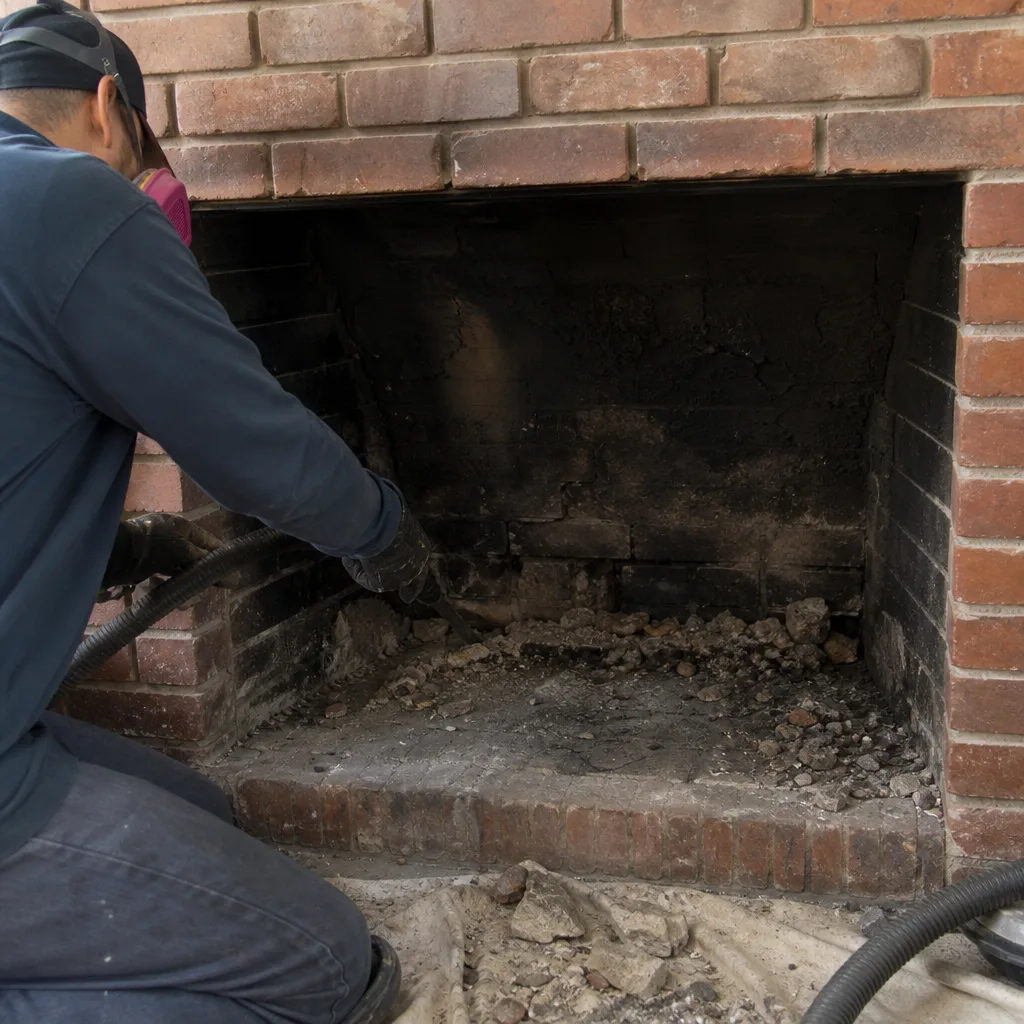 Before
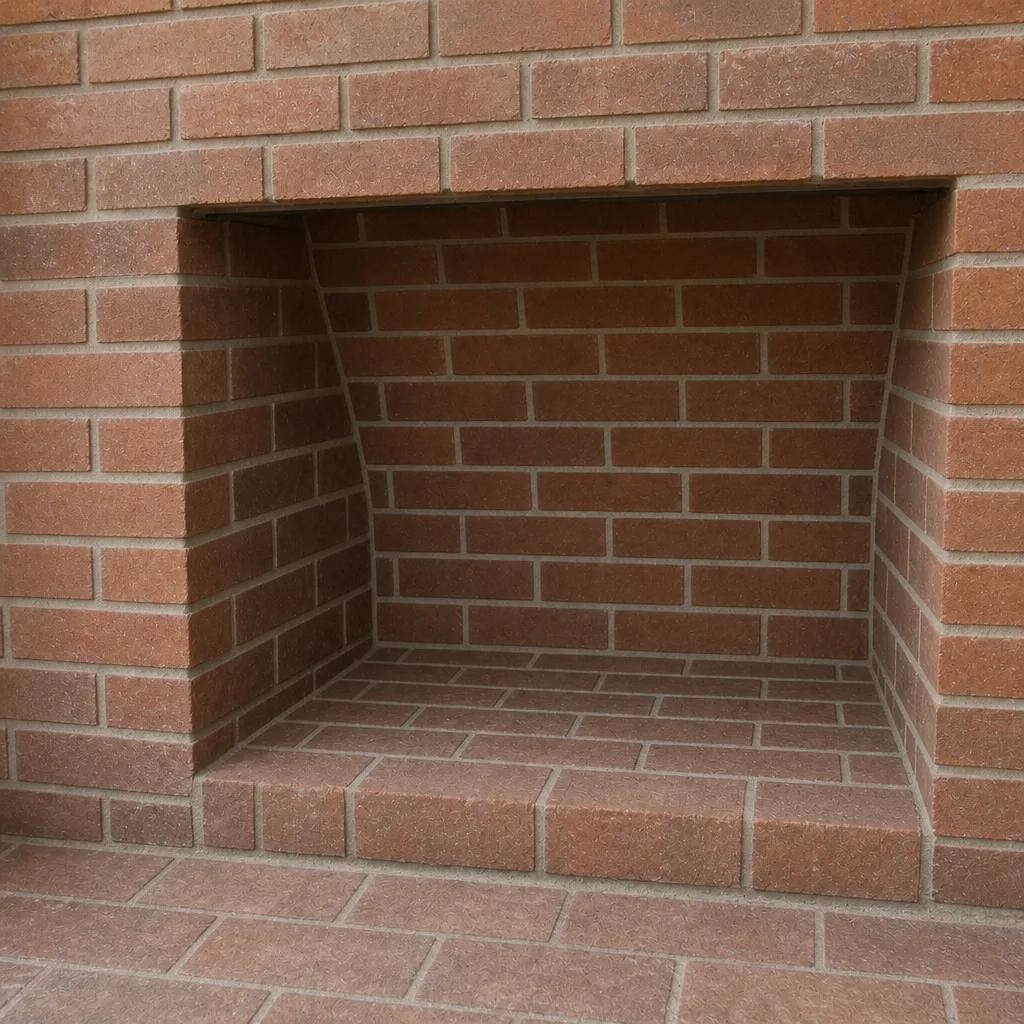 After
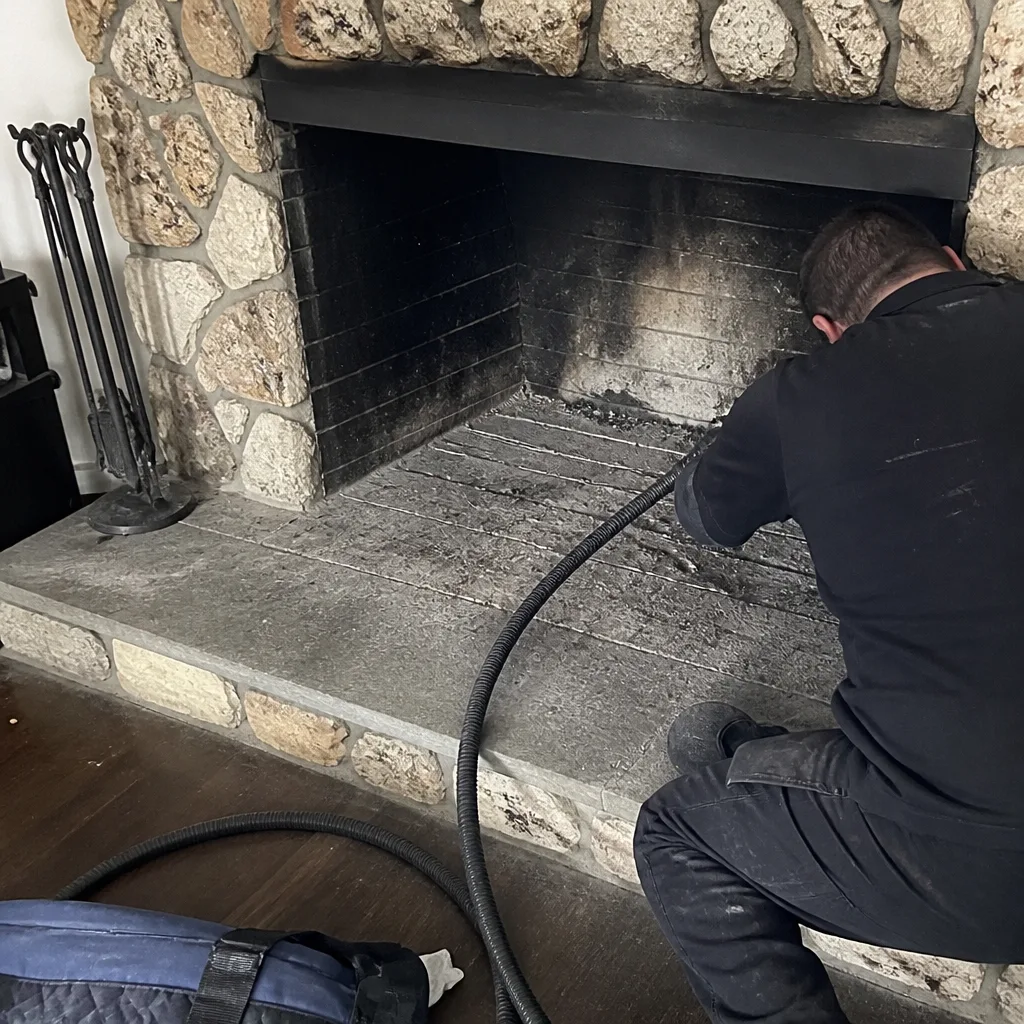 Before
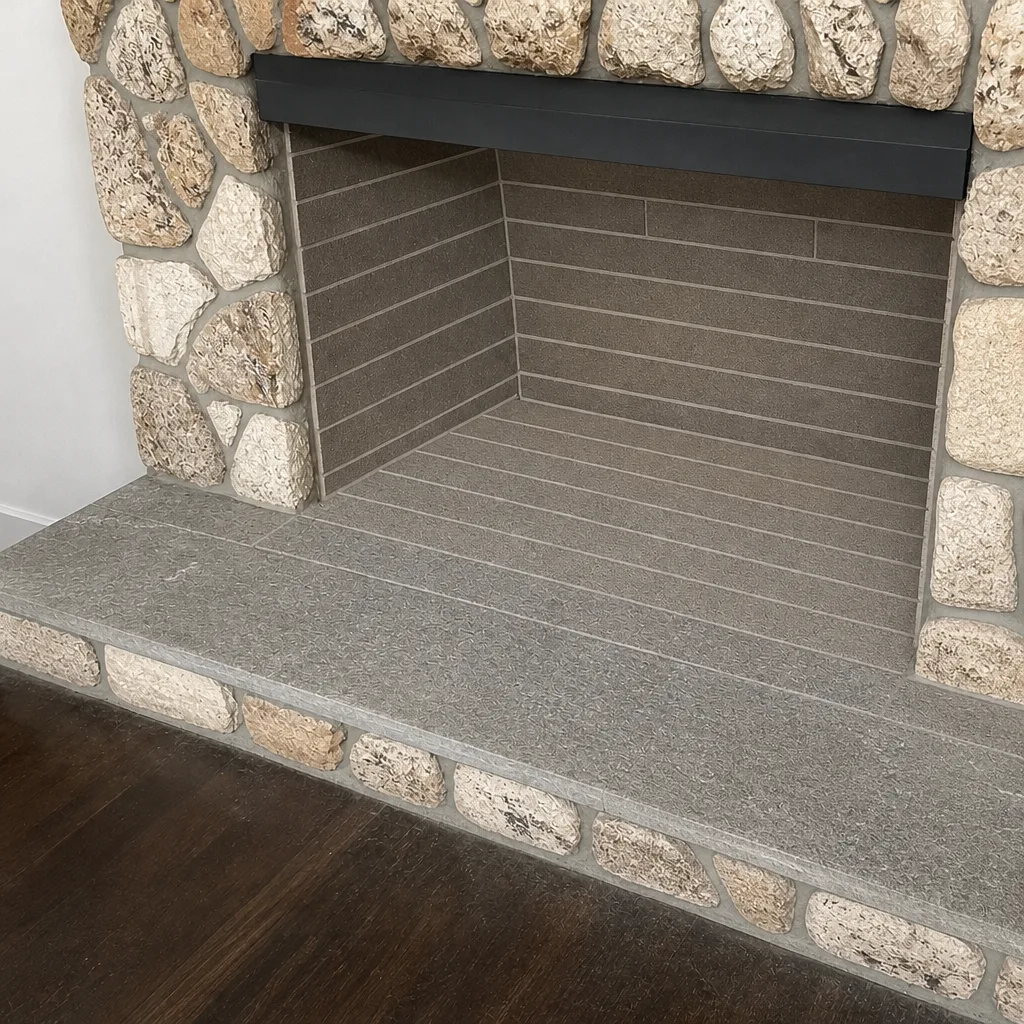 After
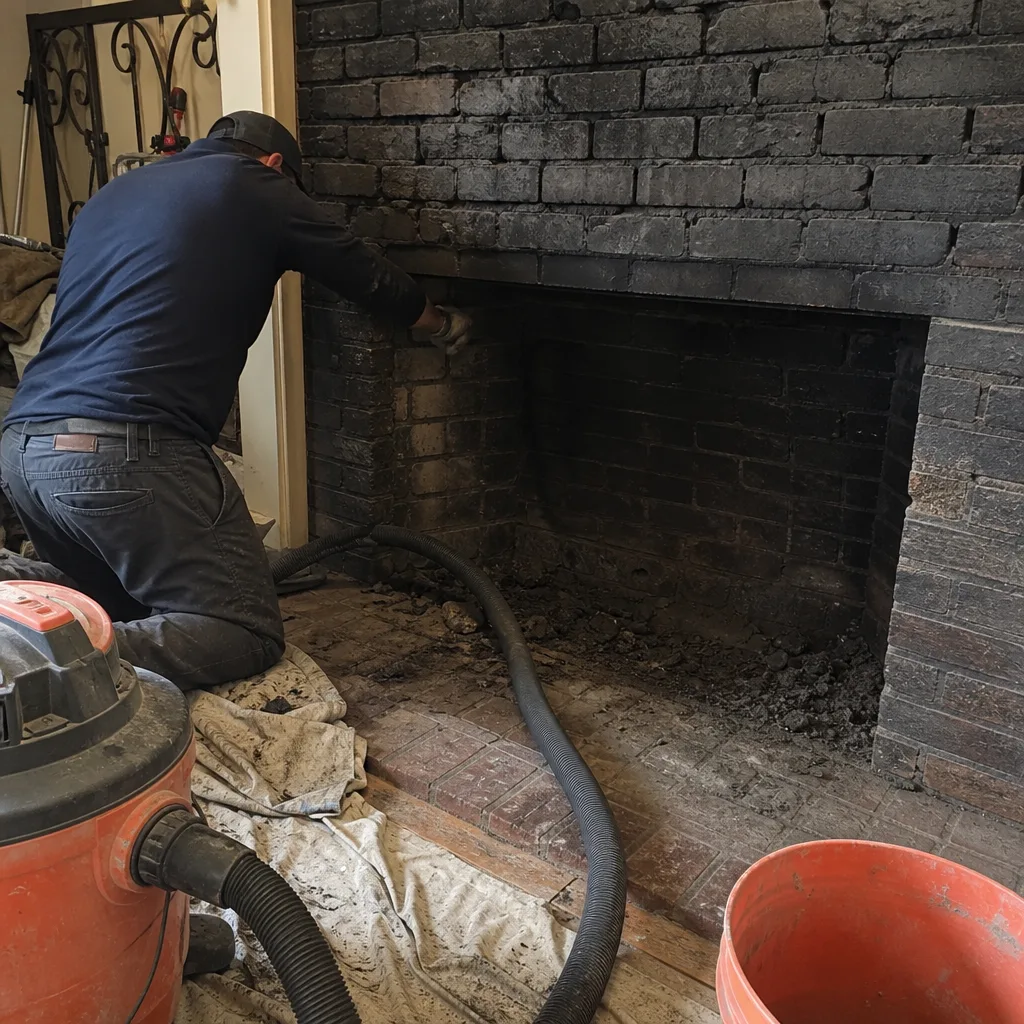 Before
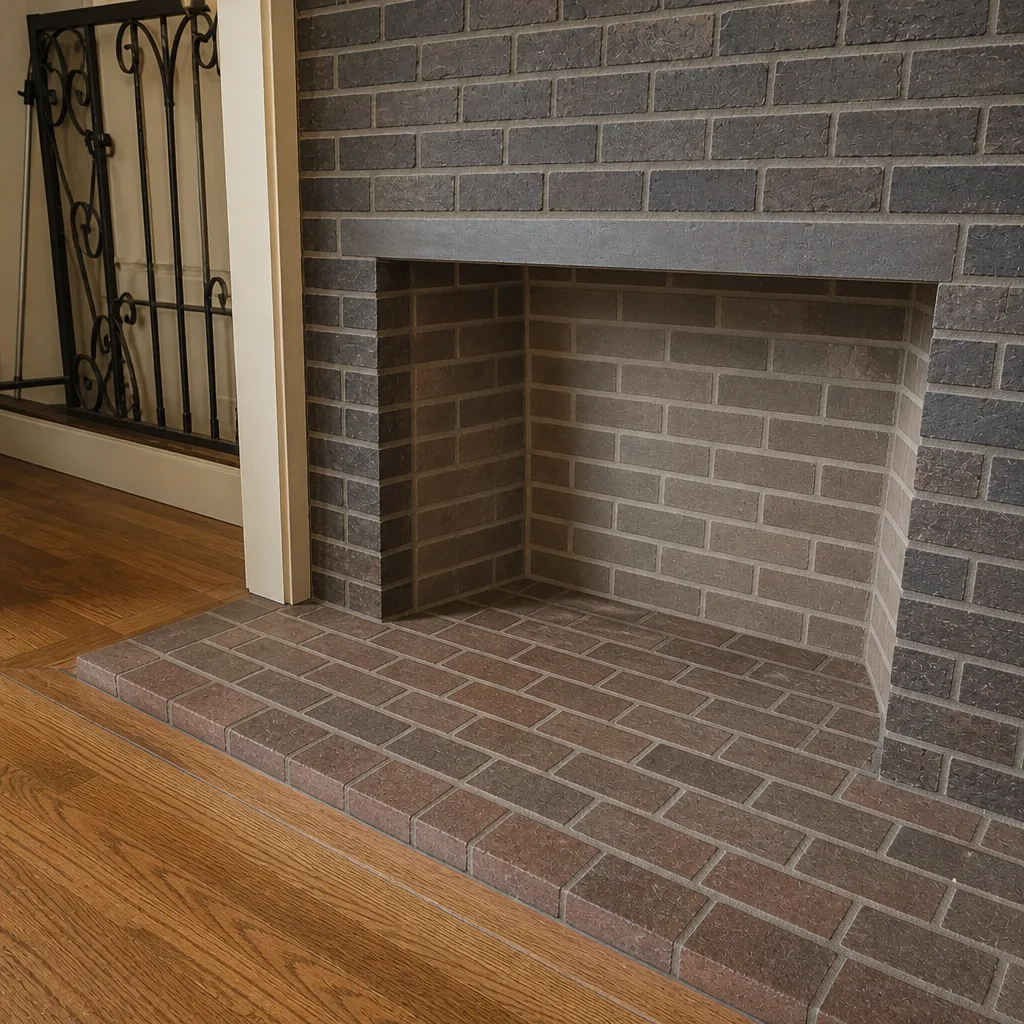 After
When to Call a Professional
Call a chimney professional if you see white staining that reappears after cleaning, if you smell your fireplace on hot days when it hasn’t been used, if animals have been on your roof, if smoke enters the room during a fire, if the firebox shows flaking brick or rust, or if your dryer takes two cycles to dry a load. These are the warning signs that something inside the system is not working correctly. Waiting does not make the repair smaller. In our experience, the longer a chimney issue goes unaddressed, the more likely it is that a $300 sweep turns into a $3,000 repair. Ashford Chimney Sweep offers free estimates in North Hollywood. Call (833) 589-9860 and we’ll assess what’s happening. We answer 24/7. Fast dispatch from 7am to 7pm, Sunday through Friday.
Frequently Asked Questions
You need a chimney cleaning if you smell a tar or campfire odor from the fireplace when it isn’t in use, if you see dark creosote buildup on the firebox walls, if smoke enters the room during a fire, if animals have nested in the flue, or if you can’t remember the last time it was swept. In North Hollywood, the hot weather odor is one of the most common signals that creosote has built up and is off-gassing. Call (833) 589-9860 for a free estimate. We answer 24/7. Fast dispatch from 7am to 7pm, Sunday through Friday.
Creosote smells like hot tar, asphalt, or a campfire that was extinguished with water. The odor is strongest on warm days when the flue interior heats up and softens the creosote. This smell means volatile tar compounds are releasing into your living space, and it signals a cleaning need.
The white stain itself is not dangerous, but the water intrusion that causes it is a progressive problem. Efflorescence means moisture is moving through the chimney masonry. That water can eventually damage the flue liner, cause spalling, and create a pathway for carbon monoxide to enter the home. Professional inspection is the right next step.
Most North Hollywood homeowners should have a professional chimney sweep at least once per year, ideally before the first fall fire. If you burn more than twice a week during the cooler months, you may need a mid-season sweep as well. Even occasional fireplaces benefit from annual inspection because animals, debris, and moisture create issues during the idle months.
Rain odor from a fireplace usually means water is entering the flue and saturating old creosote deposits. Wet creosote is more acidic and more odorous than dry creosote. The water entry point is typically a cracked crown, damaged cap, or failed mortar joint. Until that entry point is repaired, the smell will return with every rain.
Yes. Dryer vent fires are a serious home fire hazard, and they happen more often than most homeowners realize. A clogged or obstructed dryer vent forces the dryer to overheat and creates the conditions for lint ignition. Professional dryer vent cleaning removes the blockage and verifies that the venting system is moving air correctly. It is a fire-safety service, not a convenience.
The Bottom Line
Your chimney communicates with you. The white stain on the brick, the tar smell on a hot afternoon, the puff of smoke when the furnace kicks on, the scratching in the wall, the rust on the damper. These are warning signs, and they appear long before a chimney fire or a carbon monoxide event. North Hollywood’s dry-wet climate and older housing stock create specific vulnerabilities, but the patterns are predictable. The homeowners who catch these signals early spend less, repair rather than rebuild, and keep their fireplaces safe for years. The homeowners who ignore them are the ones we meet in emergency situations. You want to be in the first group. If you’ve noticed any of the signs in this guide, call (833) 589-9860. We answer 24/7. Fast dispatch from 7am to 7pm, Sunday through Friday. We’ll inspect the system honestly, explain what we find, show you the evidence, and repair what needs repairing. No scare tactics, no unnecessary upsells. Just a clean flue that drafts correctly and a liner that won’t fail.
Written by the team at Ashford Chimney Sweep, serving North Hollywood since 2012.